
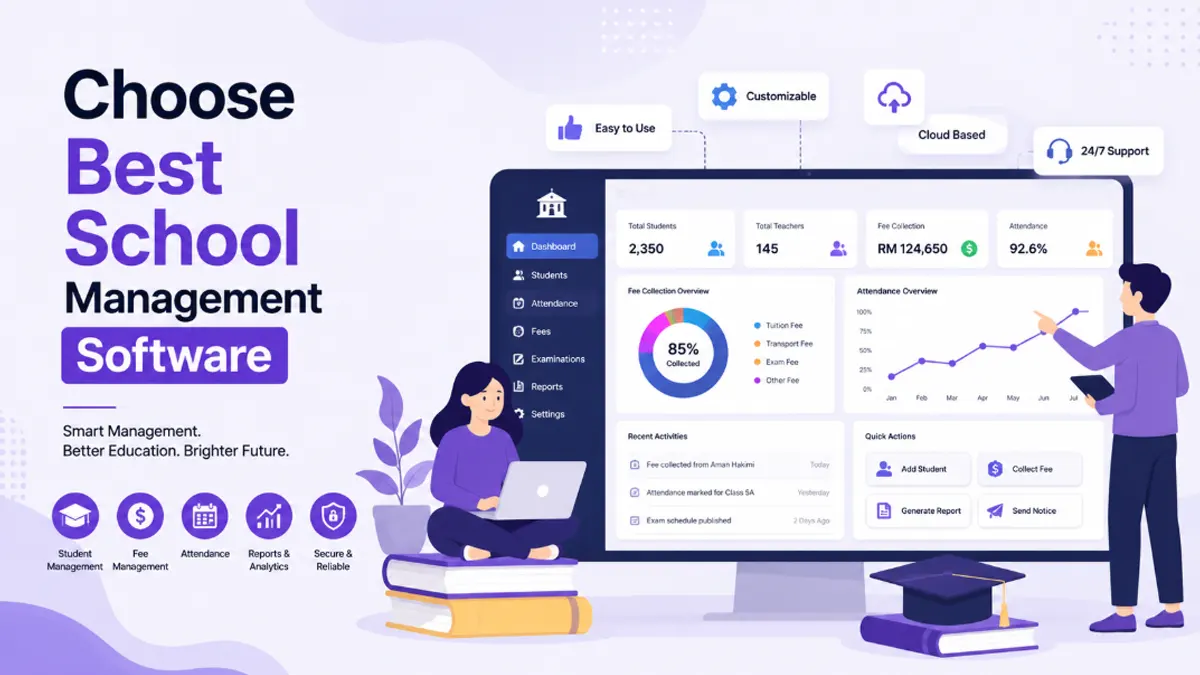
Picking a school management system shapes the entire future of your campus. Your software choice directly controls your admissions team, classroom management, parent interactions, and top-level administrative decisions.
International schools in Malaysia face heavier pressure. You have to juggle diverse student communities, multiple grading systems, and demanding parents. Buying software just because it is cheap or has a flashy demo usually creates expensive headaches later.
You need school management software Malaysia international schools can actually depend on. A strict evaluation process helps you lock down a platform that fits your specific educational goals and daily operations.
Start with your school's educational model, Not the Software

Many schools rush into software demos before mapping out their own daily operations.
Every international campus runs a bit differently. You might run a Cambridge curriculum, an IB program, or an American system. Each of those paths forces you to use completely different grading methods and reporting structures.
Ask yourself a few hard questions before you call any sales reps:
- Which curriculum do we currently offer?
- Will we introduce additional programmes in the future?
- How many campuses do we manage?
- What administrative challenges consume the most time?
- Which processes are still handled manually?
Defining your daily needs makes the shopping process incredibly clear. You can find a school management system that naturally fits your existing workflows.
Focus on the experience of parents, teachers, and students
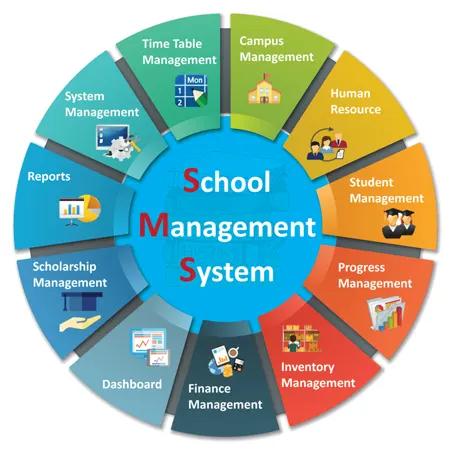
School management software touches every person on your campus. Every single user logs into the platform differently, and their daily experience should heavily influence your final choice.
Parents expect convenience
Parents want instant access to school data on their phones. They want answers before they ever have to call the front office.
You should look for systems with:
- Mobile applications
- Online fee payments
- Attendance updates
- Digital report cards
- Parent-teacher meeting scheduling
- School announcements
A strong parent portal builds real trust and keeps communication flowing smoothly.
Teachers need simple workflows
Teachers need to spend their hours actually teaching. Complicated software eats into their classroom time.
A good platform lets them quickly:
- Record attendance
- Enter grades
- Share assignments
- Monitor student progress
- Communicate with parents
Your staff will probably reject the software if basic tasks take too many clicks.
Students benefit from self-service access
Good school software gives your students direct access to:
- Timetables
- Homework
- Examination schedules
- Learning materials
- Academic results
Pushing all this data through a single dashboard forces students to take control of their own learning.
Build an evaluation team before contacting vendors
One person should never pick the school software alone.
Every department runs on its own specific workflows. You need to gather their input before looking at products.
Build a team with these key players:
| Team Member | Primary Focus |
| Principal | Strategic goals and school growth |
| Academic Coordinator | Curriculum and academic reporting |
| Admissions Team | Student enrolment process |
| Finance Manager | Billing and payment management |
| IT Administrator | Security and system integration |
| Teachers | Daily classroom usability |
Getting department heads involved early helps you spot practical needs that usually get ignored.
Create a rigid vendor scorecard
Software demonstrations always highlight perfect scenarios. You need hard metrics to actually judge a product.
Build a strict vendor evaluation scorecard to grade every pitch.
| Evaluation Criteria | Suggested Weight |
| Ease of Use | 25% |
| Parent Experience | 20% |
| Reporting & Analytics | 15% |
| Customer Support | 15% |
| Integration Capabilities | 10% |
| Security & Compliance | 10% |
| Pricing | 5% |
This raw numbers approach forces you to compare vendors objectively.
Questions every international school should ask during a product demo
The questions you ask completely determine the quality of your final choice.
Make the sales rep demonstrate actual, real-world workflows on the call. Force them to answer these directly:
- How long does it take to complete student admissions?
- Can parents receive instant notifications through a mobile app?
- How are timetable changes communicated?
- Can the system support different grading methods?
- What reports are available for school leadership?
- How is student data protected?
- What happens during software updates?
- How long does implementation typically take?
- Is training included for teachers and administrators?
Watching the rep click through these tasks live proves how the software actually handles a typical school day.
Think beyond your current needs
The software you buy right now has to survive the next decade of your school's growth.
You have to map out exactly where your campus will be 5 years from now. Ask yourself a few long-term questions:
- Will student enrolment increase?
- Are additional campuses planned?
- Will new academic programmes be introduced?
- Will parents expect more digital services?
- Will the school adopt AI-powered educational tools?
Buying an Education ERP system with room to grow prevents you from having to rip out the software in a few years.
Watch for these vendor red flags
Software providers vary wildly in their actual customer service. Watch closely for these hard warning signs before you sign anything:
- Limited implementation support
- Hidden setup or maintenance costs
- Slow customer response times
- Infrequent software updates
- Poor product documentation
- Lack of customer references
- No local support for Malaysian schools
A solid vendor gives you completely clear answers about their pricing and implementation timelines. They also map out their exact ongoing support process.
A simple 7-step framework for choosing school management software
Following a rigid system takes the guesswork out of your buying process.
- Identify your school's operational challenges.
- Build an internal evaluation committee.
- Prepare a list of essential requirements.
- Compare shortlisted vendors.
- Request live product demonstrations.
- Speak with existing customers using the software.
- Evaluate the results before making a final decision.
This framework cuts your risk. It guarantees your new platform can handle both today's heavy workload and tomorrow's new students.
Frequently Asked Questions
Conclusion
Picking the best school management software Malaysia has available forces you to find a serious technology partner. You need a vendor that actually backs up your long-term plans. You can make a solid choice by testing your educational model against the software and objectively grading the vendors.
Education moves fast. Your school needs digital tools that easily bend to fit new demands. Vetting your options heavily right now builds a highly efficient campus for the next decade.