
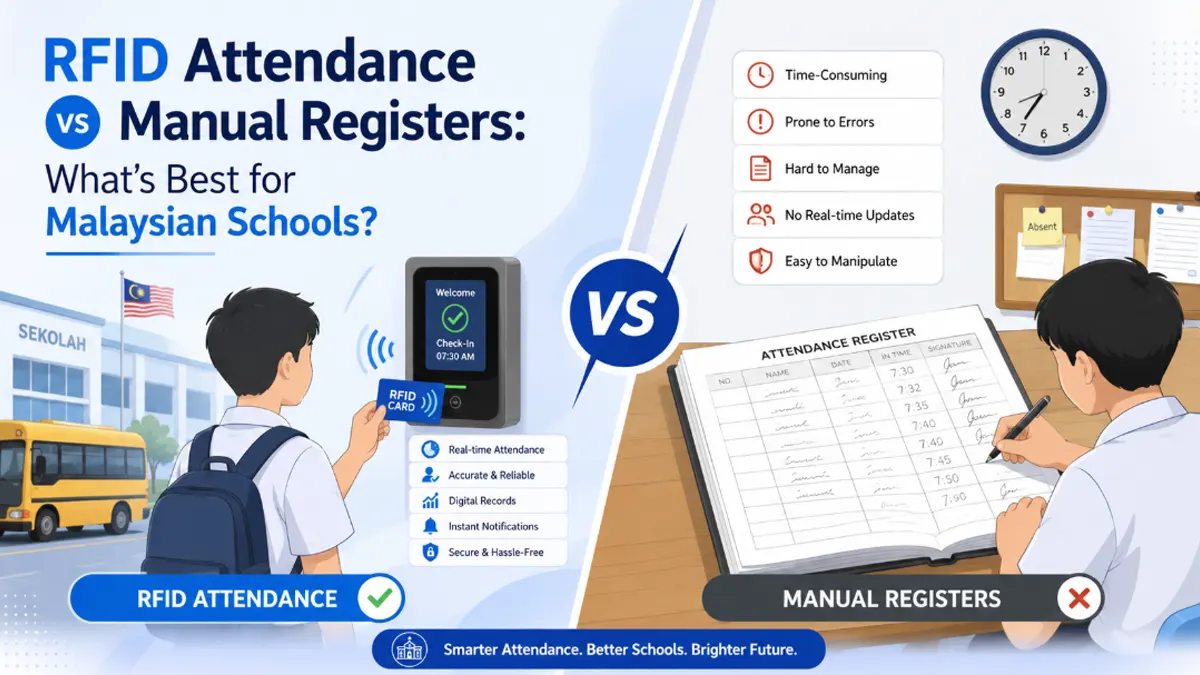
For decades, attendance meant one thing : a teacher calling out names and marking a paper register. This approach still works in many classrooms. But growing student numbers, higher parent expectations, and the need for real-time data push schools to rethink how they manage attendance.
Today, Malaysian schools look beyond basic headcounts. They want faster reporting, better visibility, improved student safety, and stronger communication with parents. This shift makes digital attendance solutions, including RFID technology, a popular choice.
But does that mean manual registers have no place?
This guide compares RFID attendance with manual registers from a practical school management view. We'll explore how each approach affects daily operations, decision-making, and the learning environment.
Why attendance management is more than recording presence
Attendance is often just a routine administrative task. But it provides valuable data that supports the entire school.
Accurate records help schools:
- Identify students who need extra support.
- Improve communication with parents.
- Monitor attendance trends across classes.
- Prepare reports for management.
- Respond effectively during emergencies.
Featured Snippet: An attendance system helps schools record, monitor, and analyze student attendance while supporting communication, reporting, and student safety.
As schools expand, attendance becomes a source of operational data rather than just a daily checklist.
The hidden costs of manual attendance
Manual registers seem simple. Yet, they create challenges that become obvious as a school grows.
Teachers spend valuable classroom time calling names and updating records. Administrative staff may later transfer that information into spreadsheets or reports. This adds work and increases the risk of duplication and human error.
Common challenges include:
- Delayed reporting.
- Paper records that are hard to find.
- Errors from manual data entry.
- Limited visibility for school leaders.
- Slow communication with parents regarding absences.
These issues seem minor. Over time, they drag down efficiency across the entire school.
What changes when schools digitise attendance?

The biggest difference between manual registers and digital attendance is how information moves throughout the school.
With a traditional register, attendance follows several manual steps before reaching administrators or parents.
A digital attendance system fixes this.
Traditional workflow
Digital workflow
By cutting manual processes, schools respond faster to attendance issues and spend less time on administration.
RFID attendance vs manual registers: understanding the difference
Both methods serve the same purpose. They support school operations in different ways.
| Feature | Manual register | RFID attendance system |
| Recording process | Paper or spreadsheet | Automatic digital recording |
| Time required | Several minutes per class | A few seconds |
| Reporting | Manual preparation | Instant reports |
| Parent notifications | Manual communication | Automated alerts |
| Attendance history | Paper files | Digital records |
| Data analysis | Limited | Real-time dashboards |
| Suitable for | Small schools | Growing and multi-campus schools |
For schools with increasing enrolment or administrative complexity, RFID technology offers efficiency and supports long-term digital transformation.
Choosing the right attendance technology
RFID is just one option. Schools should evaluate attendance technology based on their operational needs rather than just picking the newest solution.
| Technology | Best use case |
| RFID attendance | Student attendance and campus entry |
| Fingerprint attendance system | Staff attendance and secure access |
| Face recognition attendance system | High-security environments needing contactless verification |
| QR code attendance | School events and temporary attendance tracking |
| Online attendance management system | Centralised reporting across multiple locations |
Each technology has different strengths. Your choice depends on your school’s size, infrastructure, budget, and long-term goals.
How to build a future-ready attendance strategy
Technology alone won't improve management. Schools need clear processes to ensure consistent use.
Before buying a new tracker, develop a strategy that aligns with your operational goals.
A solid attendance strategy includes:
| Strategy area | Why it matters |
| Attendance policies | Creates consistent procedures across departments. |
| Staff training | Ensures everyone uses the system correctly. |
| Parent communication | Provides timely updates and builds trust. |
| Data integration | Connects attendance with academic and administrative records. |
| Regular reviews | Helps identify trends and improvement opportunities. |
When technology meets well-defined processes, schools get more value from their investment.
Attendance is becoming part of school analytics
Attendance data provides insight beyond simple records of presence.
Many schools use this information to:
- Identify patterns of absenteeism.
- Monitor student engagement.
- Support academic intervention programmes.
- Improve resource planning.
- Measure the effectiveness of attendance initiatives.
As attendance integrates with broader school management systems, leaders can make informed decisions using real-time information.
Looking ahead, attendance data may help schools identify students who need academic or wellbeing support before issues become serious.
Frequently Asked Questions
Conclusion
Choosing between RFID and manual registers is about picking an approach that supports your operational goals, improves communication, and provides reliable information.
Manual registers still serve some smaller institutions. However, many Malaysian schools are moving to digital solutions to reduce administrative work, improve accuracy, and strengthen student safety.
By evaluating your current challenges, future growth, and objectives, you can choose a system that supports both today’s requirements and tomorrow’s opportunities.